Ballet classes

Learning ballet, one step at a time


Every student starts where their age and their body allow, then moves at their own pace. Nobody is turned away at the door: that is the principle of the school.

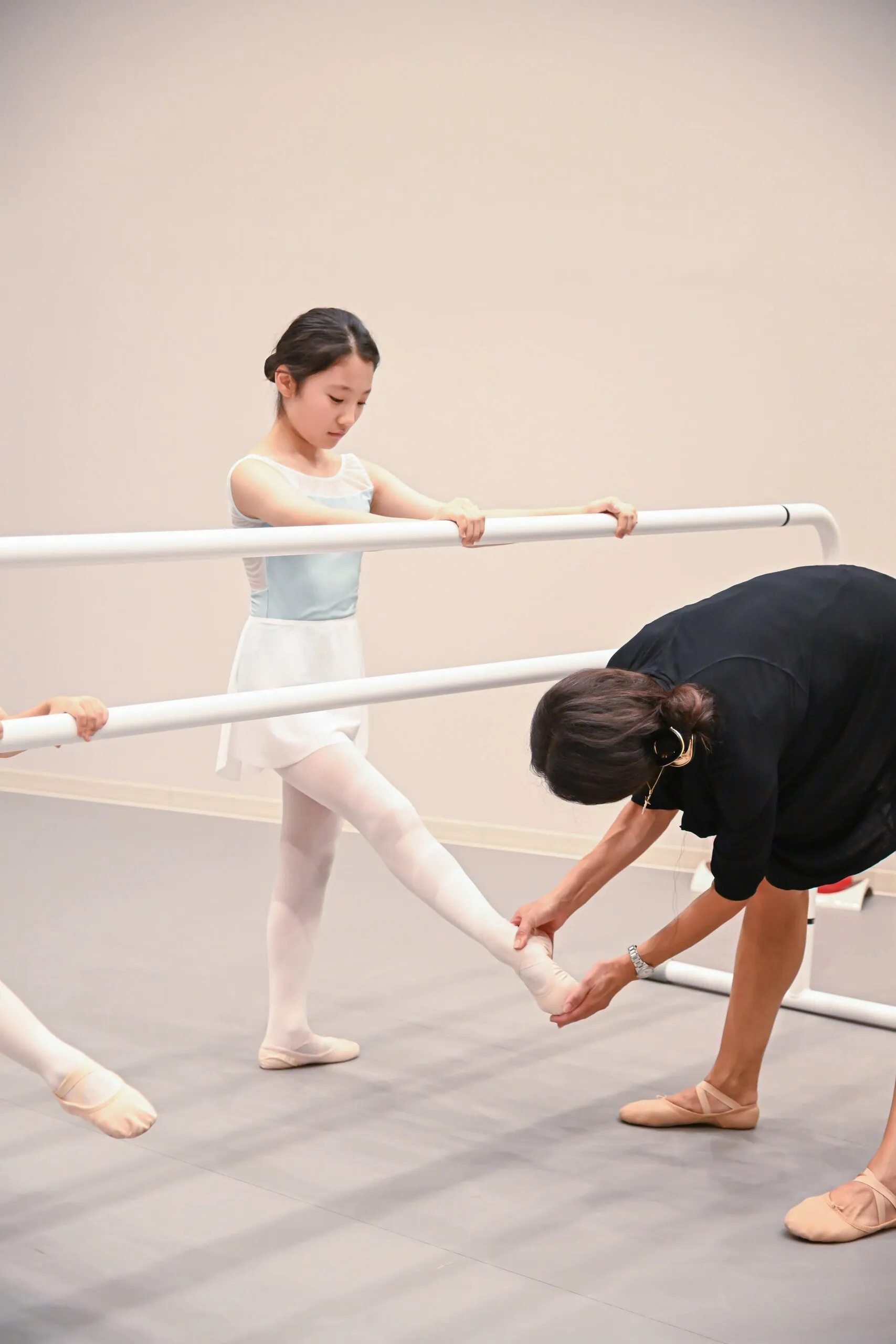
A pupil at the barre, leg extended to the side, the teacher bent down placing her foot.
At the barre, placement is corrected one pupil at a time, one foot at a time.

How a class runs


A class always follows the same order. The barre first, to place the body and wake it slowly. The centre next, without support, where the work done at the barre has to hold on its own. Travelling steps and repertoire at the end, when there is time and energy left.

That order does not change with age. What changes is the length, the vocabulary and the demand. A four-year-old and an advanced student are doing the same work, at two different scales.

What also changes is the tempo. A child asked to spend twelve counts stretching the foot and twelve counts bringing it back does not come back the following week. Here we explain, then we move: students learn to dance early, and not only to exercise. The accent falls on musicality and on what each of them has that is their own.

From the first steps to the adult classes


These are the stages of the training. The exact groups, their hours and their sizes are settled each year with the families.

The progression is easy to read: age and level determine the group, regularity drives progress, and additional hours are introduced when it becomes relevant. Professional preparation can be proposed selectively, according to the student's objectives, maturity and commitment. Students who practise for their education, their well-being and their personal development remain just as fully members of the school.

  1. First steps

    From age 3

    The youngest

    For the youngest children. They learn to listen to the music, to hold a position, to cross the room without hurrying. The body discovers dancing before it learns the vocabulary.

    At that age, a good class is not a class where everything is clean. It is a class the child leaves wanting to come back.

    Try this level

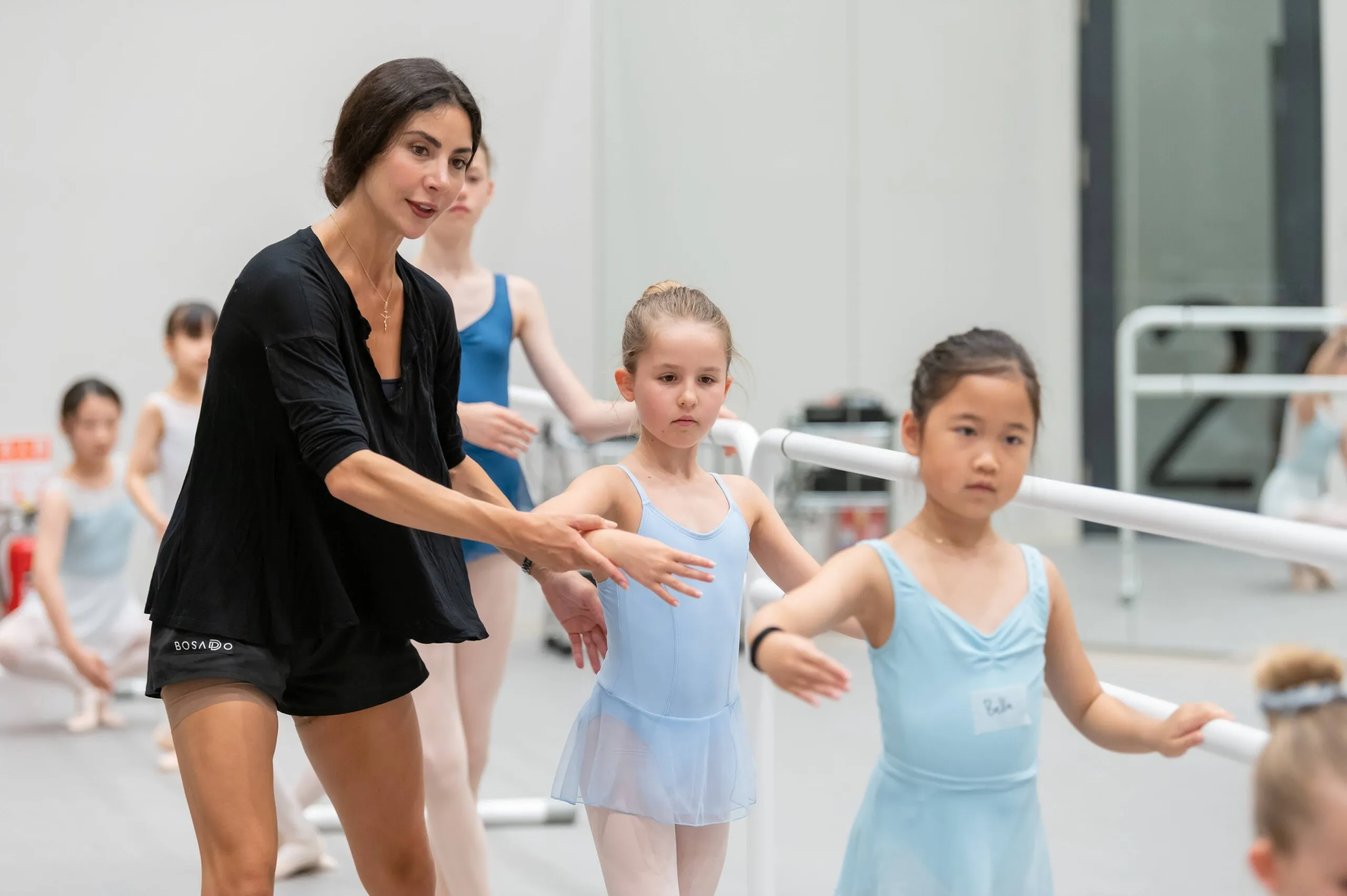
    The teacher opening the arms of two young students at once.
  2. Children

    After first steps, by age

    The groups, by age

    The move from first steps to real work. The barre enters the class, placement becomes precise, and the children begin to recognise in their own bodies what they see in dancers.

    The groups that follow keep the same logic: full barre, centre, first danced sequences. This is also when musicality becomes work in its own right, and no longer an accompaniment.

    Try this level

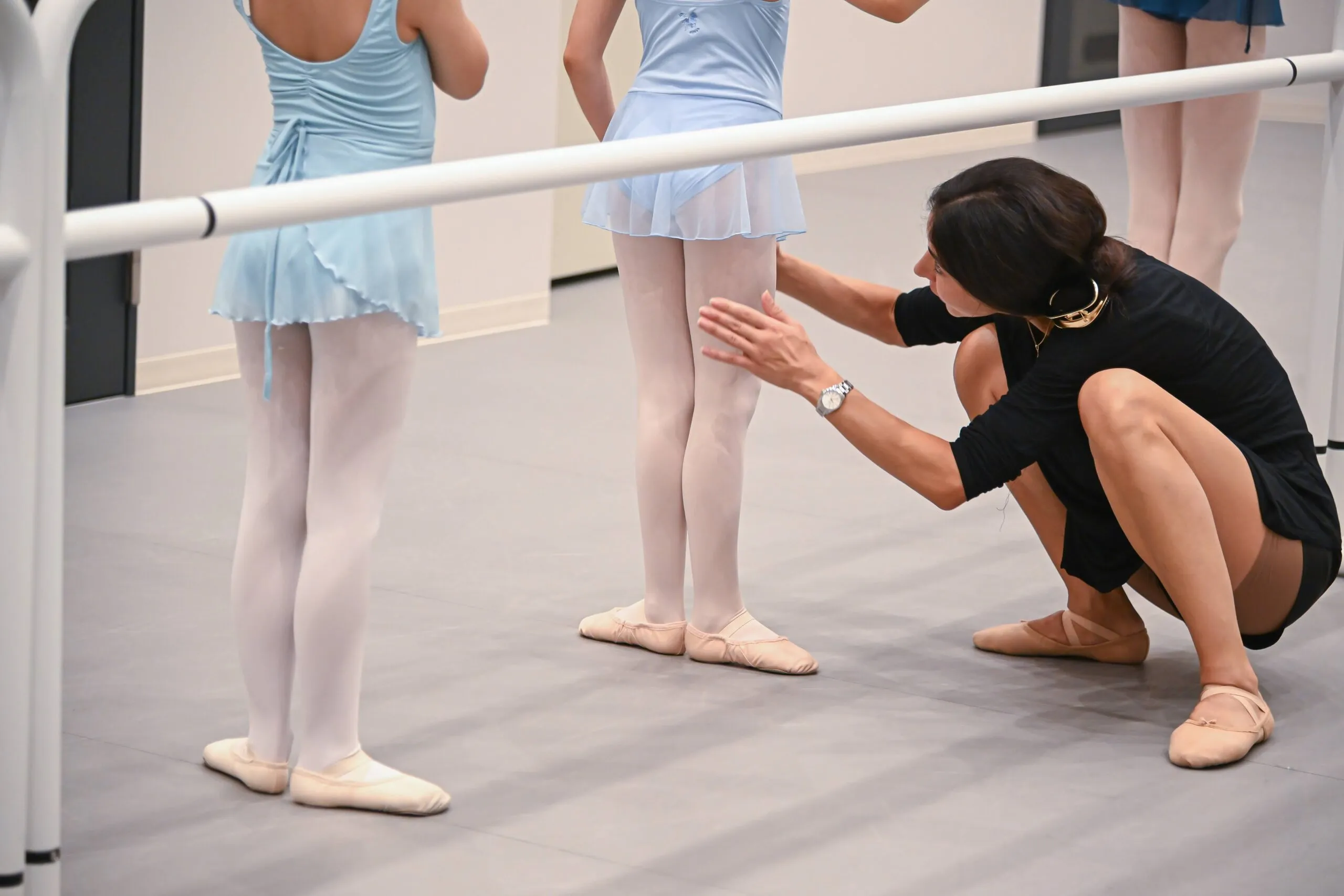
    The teacher crouched low, correcting the placement of a leg beneath the barre.
  3. Advanced

    With repertoire

    The committed students

    Repertoire enters the class. The students prepare the end-of-year performance and discover what a stage asks of them: memory, stamina, and responsibility toward a group that dances together.

    For those who want to go to the end of what classical training can give, the work intensifies: pointe work, repertoire variations, competition preparation for those who wish it. Access to this level is decided with Victoria, based on the work already done.

    Try this level

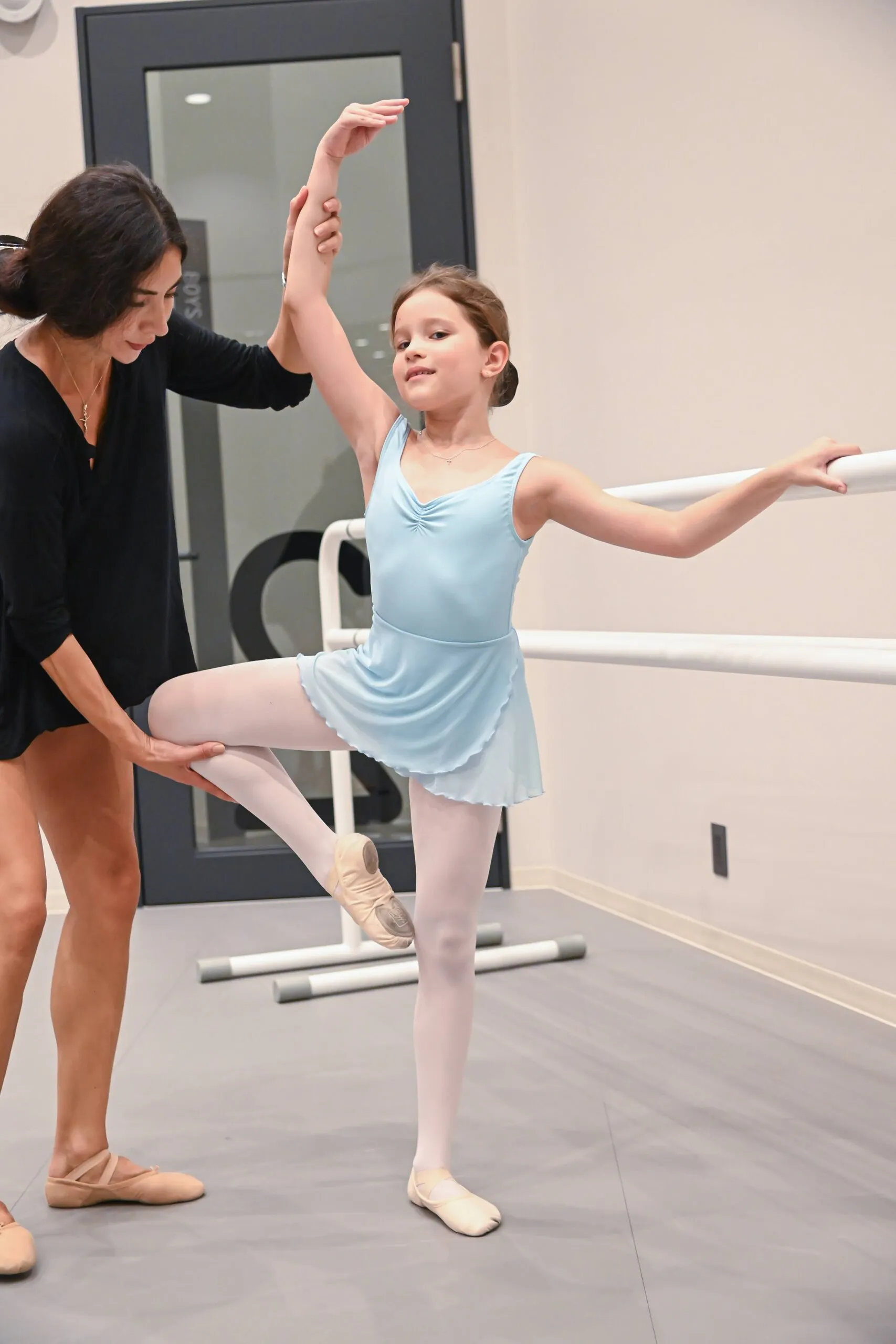
    The teacher guiding a young student's arm and knee in retiré.

Adults

The adult classes

At any age

There is no age limit for taking a place at the barre. Complete beginners, former dancers, parents who have been bringing their children for years: everyone is welcome.

Adults come with a ten-class pass, which leaves the freedom to come when the week allows. Those who wish to also take the stage at the end-of-year performance.

Come and try an adult class

One to one

Private lessons

Alone or in a pair

Work face to face, alone or in a pair, to correct one precise point, to prepare a competition or an audition, or simply to move faster.

Availability is arranged directly with Victoria, alongside the group classes and never instead of them.

Ask about a private lesson

What to know


Every class begins with a free trial class, with no commitment. It is the only honest way to find out whether the child and the school suit each other.

Group sizes stay small so that every student is corrected personally in every class. When a group is full, we say so.

Fees and enrolment

And during the holidays


Alongside the weekly classes, the school runs summer and winter intensives, with a guest teacher and dancers from other countries. It is a different rhythm, and often the moment something clicks.

Discover the intensives

Come and try a class


Tell us your child's age and what they have done before, if they have done anything. We will suggest the group that fits, and you come and see.

Book a trial class